Media and Creativity Collide

The world of advertising is always evolving and changing with the flow of the consumers’ needs. If advertising teams remain stagnant, they become a rock in the river impeding the flow of progress instead of promoting it. The most successful teams are the ones open to change. Sometimes just changing a P to a B is all you need.

Lindsay Rittenhouse gives some insight on how companies are moving with change in this week’s issue of Adweek. IHOP, BP and Westworld are a few examples of how companies are consolidating their media and creative teams to push innovation forward. IHOP’s collaboration with IPG agencies Initiative and Droga5 allowed for the IHOb campaign to come to fruition. All it took was a letter change to blow up Twitter. It would not have happened though if Initiative and Droga5 had not worked so closely throughout the campaign. Consumers in this generation require personalized media and innovative ideas to garner their attention. This creates a need for media teams and creative teams to become synonymous in order to deliver successful media campaigns. BP also had WPP Team Energy create the “Possibilities Everywhere” campaign in order to emphasize its support of transitioning to a lower carbon future. WPP used a single team made up of strategists, media specialists and creatives in order to deliver the campaign instead of splitting up the responsibility into separate teams. Westworld and Giant Spoon also found great commercial success in its campaign for the new TV show. Giant Spoon co-founder Marc Simons stated how they don’t treat media creation like an assembly line. “There’s a central team made up of strategy, creative, media, experiential that is linked to our projects. It’s not just a media-led project or creative-led project,” Simons said.

Advertising has become a creative collaboration. As consumers take in new media their expectations rise. Media and creative teams can no longer act separately if they want to create the next IHOb. Creating innovative media is difficult for one department to do. Everyone can’t be as witty as the International House of Pancakes, or should I say burgers. While collaborations between teams can bring tension and cause individuals to butt heads the pay off is tremendous. IHOP’s campaign speaks for itself garnering 1.2 million tweets and 15,000 media stories in just ten days. There were probably individuals who laughed at the idea of IHOb proclaiming that a letter change won’t create any media buzz. Low and behold though that the IHOb campaign is one of the most successful media strategies in the past few years. Times are changing and with that consumers needs are as well. Advertisers need to take risks and get creative with their media. IHOP and Westworld have shown the industry that consolidating media and creative teams are a step in the right direction in combating an evolving market. Who will use this information to succeed in the market? Only time will tell. It is clear as day though that advertising must do something different or it risks falling to the wayside in the mind of the consumers.

For more information, follow up by reading the article What’s Old is New in Adweek volume 60.

The Next Generation of Sports Media Consumption

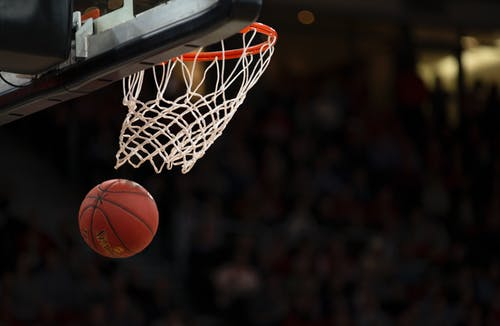
Imagine the world of virtual reality colliding with the world of sports. Real-time VR streaming fused with sportscasting to create a new world in sports media. The possibilities are endless. This is what Patrick Kulp at Adweek discovered after researching Fox’s collaboration with AT&T.

Fox decided to take a break from covering the current presidency to invest in its sports media stock. Their sports department teamed up with AT&T, Intel and Ericsson to bring the viewers of the U.S. Tennis Open Championship a more efficient and in-depth experience. By using 5G wireless services the possibilities for streaming and quality production skyrocketed while cutting costs at the same time. This raised questions on what else 5G could do for media production and consumption. The Sacramento Kings took this as an opportunity to collaborate with Verizon to create the first 360 virtual reality stream of a basketball game. While this may not help the team play any better it certainly provides fans with a new immersive experience. “Immersive media experiences are going to be one of the things that are unique on 5G,” said Jaunt CEO Mitzi Reaugh.” This step forward in sports media technology opens up many doors in the consumption of sports media allowing fans from all parts of the country to be able to experience their favorite team as if they were there. It is quite interesting where the current state of 5G is. There aren’t many 5G devices on the market, and most if not all providers are jumping at the opportunity to install 5G capabilities into a variety of venues. The future of sports media is now.

With native advertising and ad technology evolving with the times it seems like 5G is the next step for advertising as a whole. Advertising must always adapt to its ever-changing markets which is how native advertising has started to come to the forefront of most companies’ creative groups. Being able to utilize this new form of production and streaming may become an integral part in both sports media and advertising. While virtual reality might not be everyone’s cup of tea due to the issue of potential motion sickness and the technology being brand new, 5G in itself is the perfect stepping stone to bring advertising into a new world of audiences. Generation Z is one of the most tech savvy generations due to being born in an era of iPads and smartphones being commonplace in most households. To reach and relate to this new generation, sports media is making a conscious effort to evolve with the times and provide new and exciting ways to experience sports. Will this pay off as far as the numbers go? Only time will tell but it surely is a good sign to see the industry not shy away from new technology. There is a lot to learn about the usage of 5G though as it is a relatively new method of wireless connection and wireless services have had a history of problems as far as connection stability and reliability. 5G may surpass these obstacles though and can give fans what they want. Better sports coverage and better advertising.

For more information, take a look at Kulp’s  article Next-Gen Sports Viewing in Adweek New York volume 60 issue 4.

How Snickers Stole the Superbowl

While many watch the Super Bowl to find out which team will come out on top, others seek to find out which advertisement really wins the game. The advertising world is a ruthless battlefield on game day with each company aiming to make the biggest splash in the consumer market. There must be some secret, some play companies that come out on top make. How does a company like Snickers create one of the longest lasting Super Bowl commercials and win the advertising equivalent of the football trophy? This week’s trade publications in Adweek shed some light on that.

This week in Adweek the Super Bowl is the hot topic with the newest ads, how advertising is evolving and how those in the past were able to succeed in creating a lasting impression. Some say that the ad with the funniest skit or the most emotional story brings home the win, but I’ve discovered that it may not be as simple as making the audience laugh with a boy band singing about the newest chips. Gianfranco Arena and Peter Kain explain how Snickers won the game ten times over in 2010.

Who knew showing an old woman getting tackled would do the trick? Snickers had two main goals for their Super Bowl spot. One was to score high in USA Today’s Ad Meter. The other arguably more important goal was to rejuvenate the brand. They needed something that would not only garner the most attention from the audience but would also establish an identity in the consumer market. While Betty White may not have been the first thing that came to mind when discussing Snickers in 2009, she was able to embody the role of “You’re not you when you’re hungry.” down to a tee. While completely out of her element on the football field being quite a bit far off from the Golden Girls set, she was able to shock the audience by being brought down in typical Super Bowl fashion creating both laughs and a new twist on what hunger really meant.

It was truly enlightening to see how Arena and Kain broke down the methodology of creating the ad. I was amazed discovering how many parts went into creating the Snickers identity other than Betty White getting sacked. It did have a hand in grabbing the attention of the audience though which related to the first step. Starting with a captivating visual moment draws all eyes to the advertisement. From there execution becomes key. The ad may have created a different emotional response had the timing and casting weren’t fleshed out. Also, Arena and Kain emphasized that making the product the hero is essential. Create a problem, in this case hunger, and use the product to solve it by satisfying the need. When a product can satisfy a need while maintaining a unique identity, it is truly successful. The duo said it best. “Just make the most of every second, and you can still be the talk of the game.”

— Darian Arriaga

For more information, take a look at Arena and Kain’s article How Snickers Transformed A Basic Biological Need Into Super Bowl Success Adweek volume 60.

Me and Why You Should Be Interested

Hey guys! Darian here. I just wanted to tell you all a little bit about myself and give some insight on my life so far. I’m a musician that started in engineering, changed to public relations and ended up in advertising. Sounds interesting right?

My time at UF has certainly been anything but boring. I came in with the sole purpose of getting my degree in civil engineering because that’s what everyone expected of me. I picked up math and science subjects pretty well, so obviously I was “destined” to be a stem major right? Well after a little introspection and a couple of mental breakdowns I thought that maybe I could at least double major in something I love like music. I had played saxophone and trumpet in high school, so why not give it a shot here? Well apparently the music based scholarships were only available to oncoming freshmen and of course I discover this after my first semester. I did a little more research and decided that a minor in music was more manageable, fun and didn’t require me to sell an arm and a leg to cover the extra credits. So majoring in music was a bust, so what then? That was when I took my first class in the school of Journalism and Communication.

After taking a class in interpersonal communication I discovered that I love communicating. Learning the ins and outs of how and why people discuss things the way they do was fascinating and a career that involved constant interaction and presentation became my new obsession. This lead me to visit the PATH advising office and switch my major to public relations for my sophomore year. Funnily enough, I ended up switching again to advertising my third year because journalism based classes just weren’t my thing. Especially reporting. Just the thought of it makes me shudder. Anyways, this leads me to my life right now. I got to play in the marching band my freshman year, cried taking calculus, grew as a communicator in multimedia writing, and discovered what I really want in principle of advertising.

I’ll be posting interesting advertising trade posts that really make you scratch your head like how IHOP had one of the most successful campaigns in the past few years just from a name change. My goal is for both me and you to learn a thing or two about how taking risks and being bold can bring success. I’m excited for what the future holds, both with this class and in my career. Hopefully you’ll be looking at the next big advertising account executive in the next couple of years!