This Week in Sports Media

This week in Sports media

This being the week after the Super Bowl, many insights and topics were discussed in the big game. From technology used to enhance viewer experience to the multitude of shows that were stationed in Atlanta just to be in the vicinity of the Super Bowl. All through the game was not up to the general standard of the last few, there are still many insights and takeaways that can be made from the year’s most widely viewed television event. Here are a few articles that give some of the best information.

In the article “CBS’ telecast: Voices make the best of a Super Bowl with little material” David J. Halberstam broke down the ups and downs of the broadcast of the Super Bowl. Halberstam starts out by talking about the horrendous human pile up after the end of the game. Halberstam stated his empathy toward the onfield reporter and her post-game struggles “Poor Tracy. She faded from the picture and her voice was muted. For a while, I wondered whether she got crushed amid the pandemonium.” (Halberstam, para 3) He later gives his opinions about the two broadcasters and even comments on a few ads.

The broadcast of the Super Bowl was lacking and that was only because the game was also lacking. Tony Romo was unable to be as stellar as he usually is since there were only 16 points combined. The hundred people pile up just to get a post-game interview also put even more of a damper on what was an utterly forgettable Super Bowl. The article could have also used a few more statistics like Nielsen Ratings to help readers comprehend the overall audience loss that occurred as the game got progressively less entertaining.

Technology is Becoming an Emotional Attachment for Generation Z

The days of human-like technology being an integral part of everyone’s lives is becoming more of a reality because of Generation Z. From cracking jokes with Amazon’s Echo, “Alexa,” to watching the new Netflix series that the company says is in “Top Picks,” for you, companies are making technology become the supportive and reliable family member that people are starting to rely on.

The older generation’ s concern with brands breaching privacy by using personal data to target their advertising is less of an issue for the consumers of Generation Z, who believe personalized reliability, that the internet can provide, is more valuable.

Companies aren’t taking this knowledge with a grain of salt. Microsoft, for example, captivated the hearts of Americans, during the 53rd Super Bowl, when they introduced an adaptive Xbox controller and showed as disabled children played video games with it. This controller that was made with the challenges they face in mind and gave Microsoft the appearance of being the necessary heroes this specific group in society needed.

In her article, “For Generation Z the Digital Experience is the Human Experience,” Ad Age author Mary Ellen Dugan stresses the successes that companies receive in branding their products are because they market towards Gen Z and further focus on how their products can become the consumer’s best friend through their technology. Generation Z’s self-awareness about their emotional attachment in online consumerism is important for branding as Duran even mentions Gen Z, “expects digital experiences to be deeply relevant, anticipatory and seamlessly intertwined with their physical experience,” and that, “64 percent of them would rather have unlimited access to the internet than a college degree.”

With this knowledge that technology and the internet is such a high priority in the younger generation’s determination of gratifying life experience, brands more than ever need to keep this appeal of emotional attachment with humanizing technology. Someone’s best friend might betray them, but as long as their internet efficiency doesn’t then they’re happy overall.

The increasing popularity of communicating through social media may have led people to start putting more faith in the product recommendations from people their personally know. What then happens when the brands themselves become personified as the new trustworthy best friend?

-Julia

For more information go to Mary Ellen Dugan’s “For Generation Z the Digital Experience is the Human Experience” Ad Age, (February 5, 2019).

Link: https://adage.com/article/wp-engine/generation-z-digital-experience-human-experience/316487/

Will E-Programs Drive Playbills to Extinction?

Image Courtesy of Playbill Inc.

Programs are a quintessential part of the theater-going experience. As patrons are ushered in to see a Broadway show, they are greeted and offered a playbill at the door. This small program serves many purposes, allowing spectators to read the bios of the actors, a letter from the director, an outline and description of the show, as well as ads for upcoming productions. Many theatre-goers hold on to their playbills to reference after the show, and some even have collections acquired over many years. Playbills are the first interaction an audience has with a production, and they are an important part of a show’s history.

But Off Broadway and Off Off Broadway shows are beginning to ditch the physical playbill in favor of a digital version.

In the latest edition of The New York Times, theatre critic, Laura Collins-Hughes, writes about the recent rise of digital playbills in her article, “I Want My Playbill! Why Programs Are No Mere Extra.” According to Collins-Hughes, while this move to online programs is a money saver, it has its implications for audiences and performers alike.

This not only takes away convenience for the audience, it also adds a level of frustration. By choosing not to print out paper playbills, it means that only the few very dedicated and exceptionally curious members of the audience will take the time to access and read through the online program.

According to Collins-Hughes, “When a theater bypasses paper playbills, it is outsourcing a job to its audience members – saying that if they want to know more, that’s on them. Why do that to people who’ve already proven their curiosity by their presence?”

This is equally frustrating for the actors, directors, musicians, and other creatives involved in the production because it radically diminishes the chances that they will receive the recognition that they deserve.

Collins-Hughes suggests that theaters not offer digital playbills instead of paper playbills, but rather offer the choice of either one. That way the eco-friendly theatergoer can enjoy their e-playbill and the old school theatergoer can still conveniently peruse their paper copy.

For more on this, check out, Laura Collins-Hughes’ “I Want My Playbill! Why Programs Are No Mere Extra,” The New York Times, (Jan 29, 2019): C2.

The New York Times Seeks Out New Medium to Defend Journalism in the Age of ‘Fake News’

Are you uncertain about the news in the media being reliable?

In recent times, public distrust in the media made its first widespread appearance during the 2016 election through the slogan ‘Fake News’. This phenomena slams current event sources with providing erroneous content in their publications. As a result, the credibility of journalism has become a fervent issue which appears to have created a never-ending cycle of not knowing what to believe.

In the latest edition of Adweek, Jason Lynch, Adweek’s television and media editor, covers recent advances by news distributers to connect with their audiences through his article “The New York Times Is Making a New FX Docuseries to Prove It’s Not ‘Fake News’.” The New York Times announced their venture into television by producing a series entitled “The Weekly” which will feature Times journalists reporting captivating stories. The series is set to release in June and hopes to engage viewers by diving into the heart of investigative reports by displaying the reality of genuine news reporting.

The New York Times has delved into digital platforms and podcasts in the past. The series serves as a new way to reach their audience and is set to debut on FX with episodes available for streaming through FX and Hulu. Lynch suggests how, “The Weekly gives it [The New York Times] the opportunity to show audiences the power of journalism at a time when it is routinely being dismissed as ‘”fake news.”’ The opportunity to create a documentary series allows for spectators to get a behind-the-scene visual into the steps taken to create a valid news story. By giving viewers an inside look, a connection between the creators and receivers of news becomes clear and reputable. 

Living in an era where the public is weary of the media serves as a hinderance on news providers who serve as the messengers of information. The New York Times strives to set the standard for transparency as an effort to reconnect the trust lost by ‘fake news’ claims in recent times. 

For more on this, check out Jason Lynch’s “The New York Times Is Making a New FX Docuseries to Prove It’s Not ‘Fake News”, Adweek, TCA Press Tour  (Feb 7, 2019).

Artificial Intelligence: Rise of the Machines?

No one wants a robot apocalypse.

Picture Courtesy of Paramount Pictures Corporation

In modern day data science and analytics, the rise of Artificial Intelligence has improved the speed and accuracy of normally human-based tasks. With the creation of such intelligent programs, the question arises of what is acceptable use and of the limits that should be imposed to prevent any potential problems with hyper-intelligent systems.

Despite seeming to be a topic out of science fiction, the idea of a human losing control of a program is a very real and potentially dangerous situation. Films like “The Terminator” and “2001: A Space Odyssey” show us what could happen in a situation in which a rogue AI takes over.

However, as long as a machine respects the various freedoms of humans, there will be little to no risk of a robot apocalypse. A set of rules for robotic existence was laid out by fiction writer Isaac Asimov:

  1. A robot may not injure a human being or, through inaction, allow a human being to come to harm.
  2. A robot must obey orders given by human beings except where such orders would conflict with the First Law.
  3. A robot must protect its own existence as long as such protection does not conflict with the First or Second Law. (Byrum)

What does this mean for modern data science? As long as the progress of modern systems is monitored and kept in check to respect natural human rights, there should be no threat of a robot apocalypse any time soon.

To read the full article, see Joseph Byrum’s “Artificial Intelligence: The values should guide the AI revolution” Analytics, (May 5, 2018).

Link: https://pubsonline.informs.org/do/10.1287/LYTX.2018.05.09/full/

Sustainable Tourism Will Travel to Hawaii with New Leaders

pexels-photo-416726

Tourists won’t be the only thing traveling to Hawaii this year. Sustainable tourism—the concept of preserving resources in a tourist destination—is becoming the focus of the Hawaii Tourism Authority’s (HTA) agenda. This week in Travel Weekly, “Aloha Reckoning,” written by columnist Tovin Lapan, adds more dimension to a place known for its sandy beaches. Hawaii has been at the forefront of the tourism industry for quite some time. Recently, debate has been sparked over whether Hawaii needs to be advertised or if the destination speaks for itself. If advertising is no longer the HTA’s top priority, then room will be available to expand sustainable tourism practices. “Aloha Reckoning” provides further insight on this issue.

One of the HTA’s primary jobs is to ensure that the state of Hawaii is being marketed in a way that will showcase all that it has to offer. As a result of criticism to the HTA, the state of Hawaii felt that the HTA needed new management and a new focus, so the HTA has recently undergone a change in several of its management roles. This change in management has caused questioning of whether marketing efforts are something that should continue to be pursued or if the HTA’s focus should be shifted to more pressing issues. Something that the new board feels very passionately about is the sustainability of the state of Hawaii and how its resources can best be preserved through tourism. Although the new HTA leaders have only been working for a short amount of time, it seems that the HTA will remain focused on marketing but also bring the issue of sustainability to the forefront of its mission.

The biggest takeaway that this article provides is that tourism encompasses more than simply promoting a destination. Tovin Lapan emphasizes this point through speaking with former vice president of marketing for the HTA, Frank Haas. “The goal, Haas suggested, is to start managing these places and issues before they reach crisis level,” Lapan writes. In other words, the HTA’s new focus on sustainability is something that is just as essential to the longevity of tourism as advertising, and as Haas says, it is an issue that needs to be focused on sooner rather than later. Having a destination that is clean, healthy, and well-preserved is part of the draw for people to visit a place, and the overall healthiness of Hawaii will ensure that tourists will be able to travel there for many years to come.

-Alli

To read the full article, see Tovin Lapan’s “Aloha Reckoning” Travel Weekly, (Feb 5, 2019).

https://www.travelweekly.com/Hawaii-Travel/Aloha-reckoning-Hawaii-tourism-crossroads

IVF Treatment Makes Pregnancy Complicated

A Recent Study Believes IVF Is Too Dangerous to be Continued

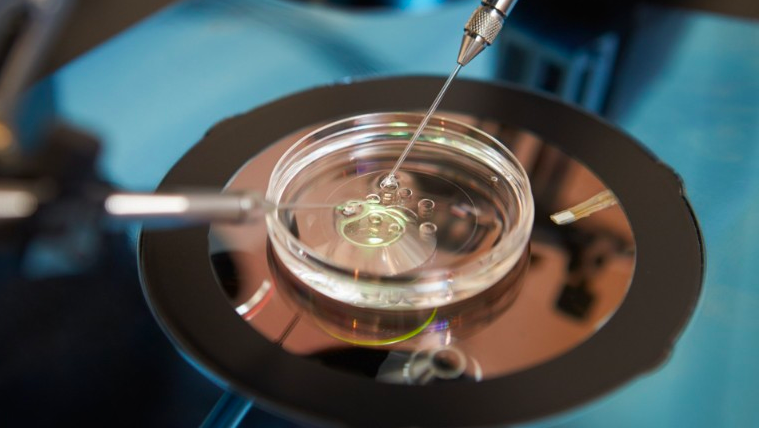
IVF process in a laboratory. Image courtesy of CNN.

Could pregnancy be any scarier? New research indicates IVF treatments are now correlated to increase the likelihood of postpartum hemorrhage, sepsis, and admission to the ICU. As if all those medical terms weren’t frightening and confusing enough, the pregnancy complications often times affect both the mother and baby.

A recent study by the Canadian Medical Journal followed women who underwent invasive infertility treatment versus those with minimally invasive. The results indicated women were a whopping 40% more likely to experience complications from invasive fertility treatment. So, should IVF not be recommended to patients with fertility issues anymore?

Lead author of CMAJ, Natalie Dayan argued otherwise stating that “it is important to remember that the absolute number of women who develop these complications remains quite small, meaning that for most women who cannot conceive naturally, this treatment is a very safe and effective method of becoming pregnant and having a child.” Her statement can be supported as most women who undergo IVF treatment often already have complications.

The study further investigated the maternal morbidity rate with respect to IVF. While the relative risk(RR) has gone down from 2.17 to 1.39, researchers indicate the best way to diminish risk is through preventative care. Before participating in IVF, mothers are encouraged to be at optimal health and only implant one embryo as opposed to several. Fewer embryos mean less risk.

With any invasive treatments comes complications and life-threatening conditions. While IVF is still an option, it seems it’s being met with negative backlash. For some, any chance of having a bundle of joy is worth the risk.

-LA

For more info, check out Natalie Dayan’s “Infertility treatment and risk of severe maternal morbidity: a propensity score–matched cohort study” CMAJ, Volume 191, Issue 5

Link: https://www.medscape.com/viewarticle/908789#vp_1

The Power of Andy: Art or Ad?

Coming out with one of the most controversial ads of this year’s Super Bowl, Burger King aired an Ad in the beloved advertising event for first time since 2006.

The ad featured the famous pop-artist Andy Warhol eating a Whopper with their logo and the hashtag #eatlikeandy. 

Image courtesy of Burger King

The ad was a 45-Second uninterrupted clip with no music or voiceovers of the documentary ‘66 scenes of America’, directed by Jørgen Leth. One of the circumstances of the negotiation between Burger King and Leth was that the video could not be changed or touched in any way. 

Warhol was one of the most influential artists of the twentieth century, so a video of him eating a burger like everyone else was a rare humanizing moment of this extravagant, larger-than-life artist. The ad was meant to be allusion to the Warhol quote “What’s great about this country is that America started the tradition where the richest consumers buy essentially the same things as the poorest. You can be watching TV and see Coca-Cola, and you know that the President drinks Coke, Liz Taylor drinks Coke, and just think, you can drink Coke, too.” 

This ad was promoted by a cryptic video of the burger king painting a picture in a similar background as the picture above and the date 2.3.19 in the end. Many critics lashed out over the use of Warhol’s image being used to sell fast-food while others praised Burger Kings marketing campaign on keeping the integrity of the original video while honoring a legend. Fernando Machado, Burger King’s global chief marketing officer said in an interview with AdAge “We believe that it’s kind of cool that he did a lot of art that looked like advertising and that we are using his art to advertise,” says Machado. “It’s like a silent assassin in the clutter of the Super Bowl.

For more information, check out Jessica Wohl’s Article “Why Burger King Showed Andy Warhol Eating a Burger in its Super Bowl Commercial” on AdAge

Link: https://adage.com/article/cmo-strategy/burger-king-andy-warhol-super-bowl-ad/316498/

International Scandals

Amazon CEO Bezos: “Thank u, next, Mr. Pecker”

Within the American business arena, the buzz is currently surrounding Amazon CEO’s Jeff Bezos modern version of the Reynold’s Pamphlet. Posted on several social media platforms yesterday afternoon, Bezos published emails providing evidence that the American Media, Inc. (AMI) attempted to blackmail him for political reasons. In the emails, the AMI demanded that Bezos publicly state that he has, “no knowledge or basis for suggesting that AMI’s coverage was politically motivated or influenced by political forces,” and in exchange the AMI would refrain from posting personal photographs exchanged between Bezos and his mistress. [Bezos, “No Thank You, Mr. Pecker’] Bezos explained that despite his embarrassment of the photographs, he refuses to validate this lie and participate in the AMI’s, “well-known practice of blackmail, political favors, political attacks, and corruption.” [Bezos, “No Thank You, Mr. Pecker”] The AMI is currently facing speculation for politically motivated actions taken on behalf of the Trump campaign and the Saudi Government.

International Plots against the American Government?

Another scandal that has made international news is the recent arrest of the CFO of Chinese technology giant Huawei, Meng Wanzhou, in Canada. The United States requested that Canadian authorities arrest Wanzhou based on charges against the executive for plotting to steal testing equipment from T-Mobile laboratories in Bellevue, Washington and for an elaborate bank fraud that helped Huawei profit by evading Iran sanctions. The two indictments are a part of a “broad and aggressive campaign by the United States to try to thwart China’s biggest telecom equipment maker.” [Conger, “Huawei Executive Took Part in Sanctions Fraud”]

American Paranoia of Foreign Governments

As discussed in last week’s publication, the scope of the Committee on Foreign Investment in the United States has increased under recent legislation. Before this measure was taken, CFIUS only reviewed large, foreign investments including takeovers and controlling stakes in American companies. Now, CFIUS additionally reviews foreign joint ventures and smaller investments in American industries that are considered “strategic” by the Chinese government – including aviation, biotechnology and alternative energy vehicles. The obvious distrust in the Chinese government by the US government has caused Chinese investment to fall more than 90% from the 2017 to 2018.

Concrete Effects

Whether or not Chinese investment in the United States is motivated by strategic, political goals or goals of economic growth is unclear. It also unclear what the effect that the preventative measures against Chinese investment taken by the US Government will have on national security. The negative effects on the US economy, however, are very clear. Going forward, the United States will need to decide whether or not the threat of the Chinese investment is great enough to sacrifice American economic growth.

Unstable Relations

Amid scandals surrounding the business and legal arenas, international relations are unstable. The US Government’s corrupt relationship with the AMI and declining relationship with the Chinese Government due to paranoia has created American distrust in both foreign governments and their own.

Black Panther Needs a Cool Ride

Black Panther

Image Courtesy​ of Walt Disney Pictures and Marvel Entertainment

Ever thought about taking a trip to Wakanda?
Well, don’t forget your Lexus.

In the spirit of true collaboration, Lexus partnered with Marvel’s Black Panther in what proved to be a highly lucrative product campaign for the redesign of its flagship Lexus Sedan and other Lexus Brand vehicles.

The runaway success of the film allowed Lexus to launch a successful global marketing campaign that had the added bonus of connecting the Lexus brand to a multicultural and multiethnic consumer-base.

Writing for Automotive News, Laurence Iliff notes that Marvel has a long history of working with the automotive industry in their films, and it is a relationship that requires faith in the potential success of a film and trust in the Marvel brand to guarantee success and brand exposure.

For Lexus, the timing couldn’t have been more perfect. The film premiered on February 16, 2018, which all but guaranteed a premiere Superbowl ad slot, adding to the exposure for both Lexus and the film.

The continuing success of the film, and its subsequent appearance at the 2019 Academy Awards, all but ensures that we will continue to see product collaborations like Black Panther and Lexus in the future because, as Cox Automotive’s vice president of marketing, Greta Crowly notes, “…you start to build a relationship with that audience, […] it gives you the green light to be able to start talking to them outside those platforms.”

-KRW

For more info, check out Laurence Iliff’s “LEAP OF FAITH.” Automotive News, 3/5/2018, Vol. 92, Issue 6819.