Did Tom Brady Deflate Your Diet?

Photo Courtesy of Julio Cortez via AP

The Super Bowl is one of the biggest days of eating in America. In fact, a conservative estimate suggests that people eat, on average, 2,400 calories from start to finish. Super Bowl spreads are saturated with pizza, wings, dips, and everything for the “big game”. However, research suggest that, for some people, the binging does not end on Sunday.

This week in The Salt, Maria Godoy explores a study by Rachel Herz of Brown University that suggests that the team people root for affects how they eat the day after the game.

People who cheered for the losing team are more likely to continue eating unhealthily the following day.  Herz says that the negative emotions people have after a team loses causes them to turn towards foods that trigger endorphins. “Foods that are high fat and high carbohydrate give you dopamine and endorphins and serotonin. And it’s dopamine, in particular, that’s the reward-and-pleasure neurotransmitter. And endorphins actually soothe our pain, both physically and mentally. The higher in fat the food is, the more endorphins you’re going to experience with that.”

Inversely, people whose favorite team won actually make healthier choices on the Monday after the Super Bowl. These people tend to have an adrenaline rush that keeps them from feeling hungry. In Herz words, “It’s akin to when you’re really excited — like when you’re in love, or you’re so excited about what’s going on you sort of forget to eat. From a neuro-chemical perspective, your body is actually feeling the sort of high that you feel like you don’t even need food, so your appetite is reduced.”

So if you blew your diet this week, you can always blame Tom Brady.

-CEM

For more information, check Maria Godoy’s article, “Game Brain Science: How Your Super Bowl Team Plays Can Sway What You Eat”.

For more in food news, check The Salt by NPR.

How Companies are Dealing with PR Disasters

As long as there are companies communicating with the public in an attempt to get their money, there will be PR disasters that will undoubtedly occur. Every year companies get hit with a PR disaster and need to deal with it immediately. How exactly these companies are dealing with said disasters is a popular topic among PR trade publications. Click here to read more.

The article I’m discussing today is “Top 10 PR Blunders of the Year- So Far” by Russell Working and published by Ragan Communications. Here, the author discusses how various well-known companies all underwent a very public PR disaster and how the leads of these companies dealt with the consequences and tried to remedy them in the public face, like in the case of rats at Burger King.

“Want to go viral? Rats in fast-food joints will do it every time. This video garnered almost 1 million views, 24,000 shares as well as national and international pickup from outlets such as The Daily Mail, Men’s Health, FoxNews.com, CBSNews.com and Yahoo News, Donahoe notes,” (Working, 2018).

After reading over these many, MANY PR blunders, it is apparent that there are countless ways for a company to mess up and hurt its reputation, especially concerning racial insensitivity. The more well-known a company is, the harder it falls when it makes a mistake. However, it’s important that they respond immediately and placate the public and its consumers by fixing the problem, addressing it, apologizing, and improving upon its business and communication models.

Screen Shot 2019-02-11 at 1.00.16 AM

Image Courtesy of Twitter

Women Are Embracing a Different Type of Love on Valentine’s Day

Image courtesy of NBC

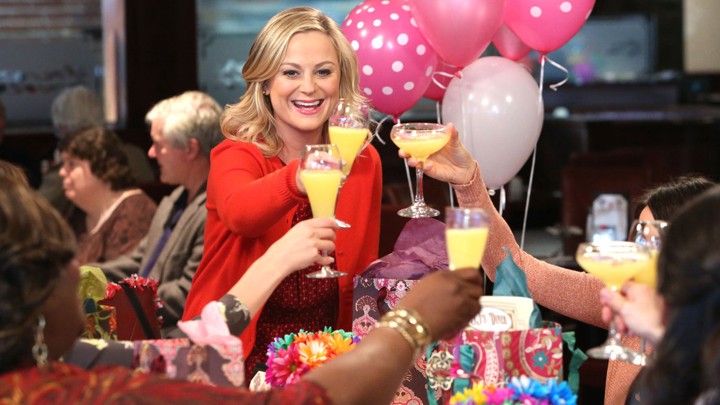
Are you tired of spending Valentine’s Day alone every year? Galentine’s Day allows for the celebration of friendships instead.

Originally created by the NBC show Parks and Recreation in 2010, Galentine’s Day is an ode to female friendships and self-love. This made-up holiday is usually celebrated on February 13th and is more prominent this year than it ever has been. Stores such as Walmart and Party City are taking advantage of this opportunity and have created an entire line of Galentine’s Day products that range from napkins to balloons.

Only 51% of Americans plan to celebrate Valentines Day this year, which is a huge decrease from its all-time high of 63% in 2007. Galentine’s Day means more people going out on the days that surround Valentines Day, which is extremely beneficial for restaurants. The Wall Street Journal quotes Amber Cote, a restaurant owner, “Why not have an event that enhances business on these ‘shoulder dates’ that wouldn’t otherwise be incredibly busy.”

Clearly, many restaurants and retailers have been benefitting from this holiday, but Galentine’s Day is also a huge part of the feminist movement. It opens up the concept of female empowerment, and is especially important in the midst of the #metoo movement. There is a reason as to why the term was coined in 2010 but has not emerged until recently. It is proving that women do not have to wait for men to being them flowers, and is encouraging them to find love in other places.

For more on this, check out, Anne Marie Chaker’s “Nobody Likes Valentine’s Day Anymore,” The Wall Street Journal , (Feb 9, 2019).

This Week in Sports Media

This week in Sports media

This being the week after the Super Bowl, many insights and topics were discussed in the big game. From technology used to enhance viewer experience to the multitude of shows that were stationed in Atlanta just to be in the vicinity of the Super Bowl. All through the game was not up to the general standard of the last few, there are still many insights and takeaways that can be made from the year’s most widely viewed television event. Here are a few articles that give some of the best information.

In the article “CBS’ telecast: Voices make the best of a Super Bowl with little material” David J. Halberstam broke down the ups and downs of the broadcast of the Super Bowl. Halberstam starts out by talking about the horrendous human pile up after the end of the game. Halberstam stated his empathy toward the onfield reporter and her post-game struggles “Poor Tracy. She faded from the picture and her voice was muted. For a while, I wondered whether she got crushed amid the pandemonium.” (Halberstam, para 3) He later gives his opinions about the two broadcasters and even comments on a few ads.

The broadcast of the Super Bowl was lacking and that was only because the game was also lacking. Tony Romo was unable to be as stellar as he usually is since there were only 16 points combined. The hundred people pile up just to get a post-game interview also put even more of a damper on what was an utterly forgettable Super Bowl. The article could have also used a few more statistics like Nielsen Ratings to help readers comprehend the overall audience loss that occurred as the game got progressively less entertaining.

Technology is Becoming an Emotional Attachment for Generation Z

The days of human-like technology being an integral part of everyone’s lives is becoming more of a reality because of Generation Z. From cracking jokes with Amazon’s Echo, “Alexa,” to watching the new Netflix series that the company says is in “Top Picks,” for you, companies are making technology become the supportive and reliable family member that people are starting to rely on.

The older generation’ s concern with brands breaching privacy by using personal data to target their advertising is less of an issue for the consumers of Generation Z, who believe personalized reliability, that the internet can provide, is more valuable.

Companies aren’t taking this knowledge with a grain of salt. Microsoft, for example, captivated the hearts of Americans, during the 53rd Super Bowl, when they introduced an adaptive Xbox controller and showed as disabled children played video games with it. This controller that was made with the challenges they face in mind and gave Microsoft the appearance of being the necessary heroes this specific group in society needed.

In her article, “For Generation Z the Digital Experience is the Human Experience,” Ad Age author Mary Ellen Dugan stresses the successes that companies receive in branding their products are because they market towards Gen Z and further focus on how their products can become the consumer’s best friend through their technology. Generation Z’s self-awareness about their emotional attachment in online consumerism is important for branding as Duran even mentions Gen Z, “expects digital experiences to be deeply relevant, anticipatory and seamlessly intertwined with their physical experience,” and that, “64 percent of them would rather have unlimited access to the internet than a college degree.”

With this knowledge that technology and the internet is such a high priority in the younger generation’s determination of gratifying life experience, brands more than ever need to keep this appeal of emotional attachment with humanizing technology. Someone’s best friend might betray them, but as long as their internet efficiency doesn’t then they’re happy overall.

The increasing popularity of communicating through social media may have led people to start putting more faith in the product recommendations from people their personally know. What then happens when the brands themselves become personified as the new trustworthy best friend?

-Julia

For more information go to Mary Ellen Dugan’s “For Generation Z the Digital Experience is the Human Experience” Ad Age, (February 5, 2019).

Link: https://adage.com/article/wp-engine/generation-z-digital-experience-human-experience/316487/

Will E-Programs Drive Playbills to Extinction?

Image Courtesy of Playbill Inc.

Programs are a quintessential part of the theater-going experience. As patrons are ushered in to see a Broadway show, they are greeted and offered a playbill at the door. This small program serves many purposes, allowing spectators to read the bios of the actors, a letter from the director, an outline and description of the show, as well as ads for upcoming productions. Many theatre-goers hold on to their playbills to reference after the show, and some even have collections acquired over many years. Playbills are the first interaction an audience has with a production, and they are an important part of a show’s history.

But Off Broadway and Off Off Broadway shows are beginning to ditch the physical playbill in favor of a digital version.

In the latest edition of The New York Times, theatre critic, Laura Collins-Hughes, writes about the recent rise of digital playbills in her article, “I Want My Playbill! Why Programs Are No Mere Extra.” According to Collins-Hughes, while this move to online programs is a money saver, it has its implications for audiences and performers alike.

This not only takes away convenience for the audience, it also adds a level of frustration. By choosing not to print out paper playbills, it means that only the few very dedicated and exceptionally curious members of the audience will take the time to access and read through the online program.

According to Collins-Hughes, “When a theater bypasses paper playbills, it is outsourcing a job to its audience members – saying that if they want to know more, that’s on them. Why do that to people who’ve already proven their curiosity by their presence?”

This is equally frustrating for the actors, directors, musicians, and other creatives involved in the production because it radically diminishes the chances that they will receive the recognition that they deserve.

Collins-Hughes suggests that theaters not offer digital playbills instead of paper playbills, but rather offer the choice of either one. That way the eco-friendly theatergoer can enjoy their e-playbill and the old school theatergoer can still conveniently peruse their paper copy.

For more on this, check out, Laura Collins-Hughes’ “I Want My Playbill! Why Programs Are No Mere Extra,” The New York Times, (Jan 29, 2019): C2.

The New York Times Seeks Out New Medium to Defend Journalism in the Age of ‘Fake News’

Are you uncertain about the news in the media being reliable?

In recent times, public distrust in the media made its first widespread appearance during the 2016 election through the slogan ‘Fake News’. This phenomena slams current event sources with providing erroneous content in their publications. As a result, the credibility of journalism has become a fervent issue which appears to have created a never-ending cycle of not knowing what to believe.

In the latest edition of Adweek, Jason Lynch, Adweek’s television and media editor, covers recent advances by news distributers to connect with their audiences through his article “The New York Times Is Making a New FX Docuseries to Prove It’s Not ‘Fake News’.” The New York Times announced their venture into television by producing a series entitled “The Weekly” which will feature Times journalists reporting captivating stories. The series is set to release in June and hopes to engage viewers by diving into the heart of investigative reports by displaying the reality of genuine news reporting.

The New York Times has delved into digital platforms and podcasts in the past. The series serves as a new way to reach their audience and is set to debut on FX with episodes available for streaming through FX and Hulu. Lynch suggests how, “The Weekly gives it [The New York Times] the opportunity to show audiences the power of journalism at a time when it is routinely being dismissed as ‘”fake news.”’ The opportunity to create a documentary series allows for spectators to get a behind-the-scene visual into the steps taken to create a valid news story. By giving viewers an inside look, a connection between the creators and receivers of news becomes clear and reputable. 

Living in an era where the public is weary of the media serves as a hinderance on news providers who serve as the messengers of information. The New York Times strives to set the standard for transparency as an effort to reconnect the trust lost by ‘fake news’ claims in recent times. 

For more on this, check out Jason Lynch’s “The New York Times Is Making a New FX Docuseries to Prove It’s Not ‘Fake News”, Adweek, TCA Press Tour  (Feb 7, 2019).

Artificial Intelligence: Rise of the Machines?

No one wants a robot apocalypse.

Picture Courtesy of Paramount Pictures Corporation

In modern day data science and analytics, the rise of Artificial Intelligence has improved the speed and accuracy of normally human-based tasks. With the creation of such intelligent programs, the question arises of what is acceptable use and of the limits that should be imposed to prevent any potential problems with hyper-intelligent systems.

Despite seeming to be a topic out of science fiction, the idea of a human losing control of a program is a very real and potentially dangerous situation. Films like “The Terminator” and “2001: A Space Odyssey” show us what could happen in a situation in which a rogue AI takes over.

However, as long as a machine respects the various freedoms of humans, there will be little to no risk of a robot apocalypse. A set of rules for robotic existence was laid out by fiction writer Isaac Asimov:

  1. A robot may not injure a human being or, through inaction, allow a human being to come to harm.
  2. A robot must obey orders given by human beings except where such orders would conflict with the First Law.
  3. A robot must protect its own existence as long as such protection does not conflict with the First or Second Law. (Byrum)

What does this mean for modern data science? As long as the progress of modern systems is monitored and kept in check to respect natural human rights, there should be no threat of a robot apocalypse any time soon.

To read the full article, see Joseph Byrum’s “Artificial Intelligence: The values should guide the AI revolution” Analytics, (May 5, 2018).

Link: https://pubsonline.informs.org/do/10.1287/LYTX.2018.05.09/full/

Sustainable Tourism Will Travel to Hawaii with New Leaders

pexels-photo-416726

Tourists won’t be the only thing traveling to Hawaii this year. Sustainable tourism—the concept of preserving resources in a tourist destination—is becoming the focus of the Hawaii Tourism Authority’s (HTA) agenda. This week in Travel Weekly, “Aloha Reckoning,” written by columnist Tovin Lapan, adds more dimension to a place known for its sandy beaches. Hawaii has been at the forefront of the tourism industry for quite some time. Recently, debate has been sparked over whether Hawaii needs to be advertised or if the destination speaks for itself. If advertising is no longer the HTA’s top priority, then room will be available to expand sustainable tourism practices. “Aloha Reckoning” provides further insight on this issue.

One of the HTA’s primary jobs is to ensure that the state of Hawaii is being marketed in a way that will showcase all that it has to offer. As a result of criticism to the HTA, the state of Hawaii felt that the HTA needed new management and a new focus, so the HTA has recently undergone a change in several of its management roles. This change in management has caused questioning of whether marketing efforts are something that should continue to be pursued or if the HTA’s focus should be shifted to more pressing issues. Something that the new board feels very passionately about is the sustainability of the state of Hawaii and how its resources can best be preserved through tourism. Although the new HTA leaders have only been working for a short amount of time, it seems that the HTA will remain focused on marketing but also bring the issue of sustainability to the forefront of its mission.

The biggest takeaway that this article provides is that tourism encompasses more than simply promoting a destination. Tovin Lapan emphasizes this point through speaking with former vice president of marketing for the HTA, Frank Haas. “The goal, Haas suggested, is to start managing these places and issues before they reach crisis level,” Lapan writes. In other words, the HTA’s new focus on sustainability is something that is just as essential to the longevity of tourism as advertising, and as Haas says, it is an issue that needs to be focused on sooner rather than later. Having a destination that is clean, healthy, and well-preserved is part of the draw for people to visit a place, and the overall healthiness of Hawaii will ensure that tourists will be able to travel there for many years to come.

-Alli

To read the full article, see Tovin Lapan’s “Aloha Reckoning” Travel Weekly, (Feb 5, 2019).

https://www.travelweekly.com/Hawaii-Travel/Aloha-reckoning-Hawaii-tourism-crossroads

IVF Treatment Makes Pregnancy Complicated

A Recent Study Believes IVF Is Too Dangerous to be Continued

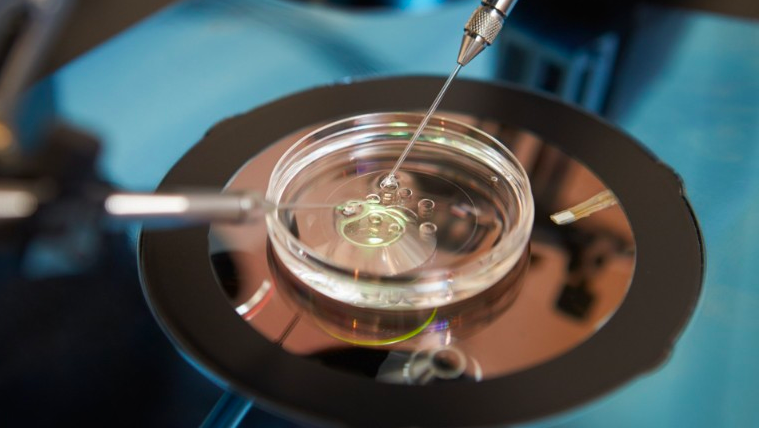
IVF process in a laboratory. Image courtesy of CNN.

Could pregnancy be any scarier? New research indicates IVF treatments are now correlated to increase the likelihood of postpartum hemorrhage, sepsis, and admission to the ICU. As if all those medical terms weren’t frightening and confusing enough, the pregnancy complications often times affect both the mother and baby.

A recent study by the Canadian Medical Journal followed women who underwent invasive infertility treatment versus those with minimally invasive. The results indicated women were a whopping 40% more likely to experience complications from invasive fertility treatment. So, should IVF not be recommended to patients with fertility issues anymore?

Lead author of CMAJ, Natalie Dayan argued otherwise stating that “it is important to remember that the absolute number of women who develop these complications remains quite small, meaning that for most women who cannot conceive naturally, this treatment is a very safe and effective method of becoming pregnant and having a child.” Her statement can be supported as most women who undergo IVF treatment often already have complications.

The study further investigated the maternal morbidity rate with respect to IVF. While the relative risk(RR) has gone down from 2.17 to 1.39, researchers indicate the best way to diminish risk is through preventative care. Before participating in IVF, mothers are encouraged to be at optimal health and only implant one embryo as opposed to several. Fewer embryos mean less risk.

With any invasive treatments comes complications and life-threatening conditions. While IVF is still an option, it seems it’s being met with negative backlash. For some, any chance of having a bundle of joy is worth the risk.

-LA

For more info, check out Natalie Dayan’s “Infertility treatment and risk of severe maternal morbidity: a propensity score–matched cohort study” CMAJ, Volume 191, Issue 5

Link: https://www.medscape.com/viewarticle/908789#vp_1