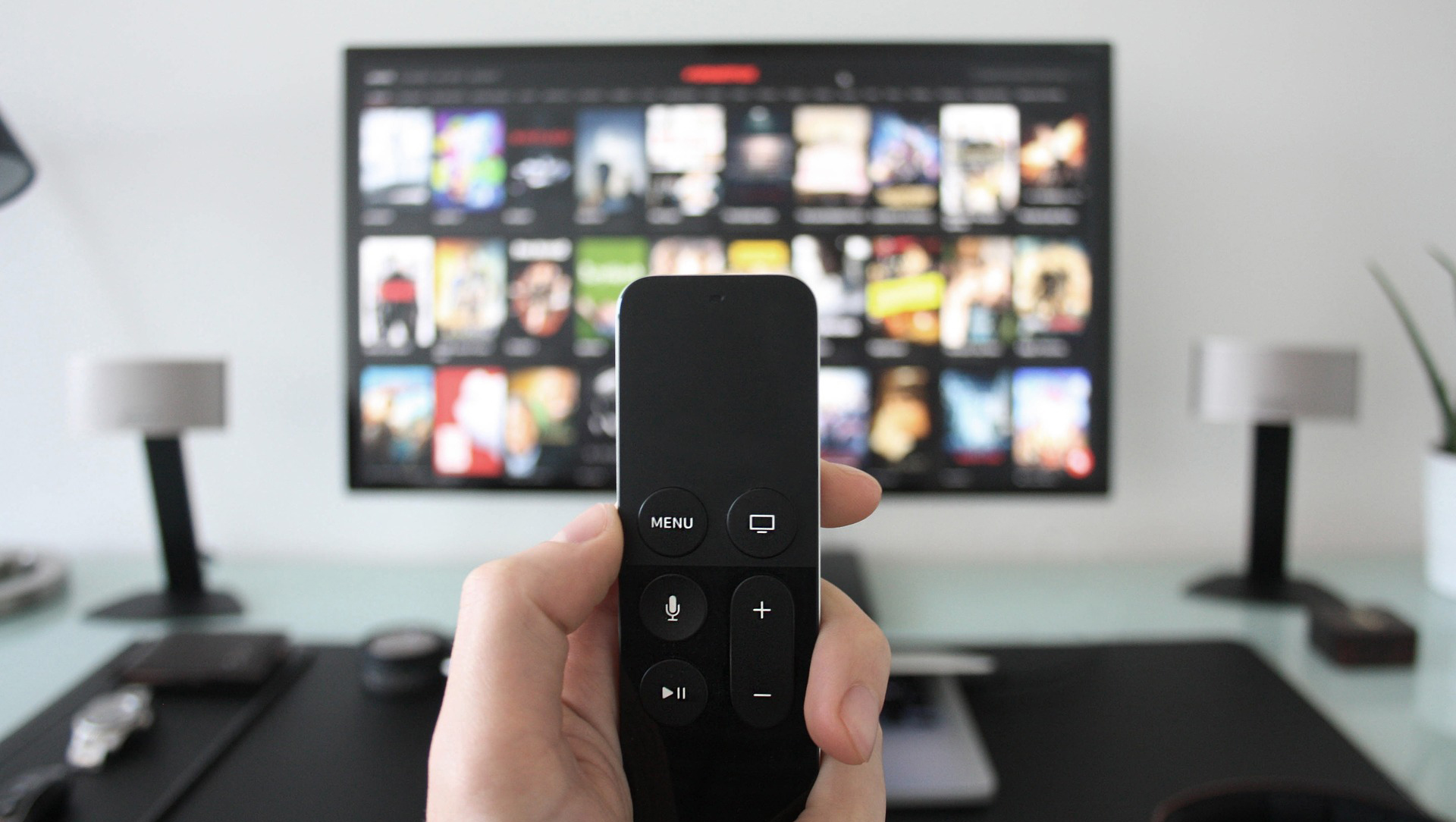
Streaming Competition Fires Up While Cable Struggles

Epix and Starz can barely keep up with HBO and Showtime, let alone increasingly abundant new streaming services

We live in an era of streaming. Whether you want to listen to music or podcasts, watch tutorials or talk shows, or cuddle up for original or classic movies, there are plenty of available services. The big names in movie and TV show streaming have been Hulu and Netflix for quite some time, but plenty of corporations want to get their hands on some of the industry’s bandwidth.

The hard hitters that everyone has been talking about are Apple, Disney, and WarnerMedia. All three companies have announced their respective new streaming platforms, further increasing the abundance of subscriptions available to consumers. Apple and WarnerMedia have yet to name their services, but Disney’s Disney+ has been well-known since late 2018; both Disney+ and Apple’s streaming services are expected to launch near the end of 2019.

All of these streaming services will have vastly different selections of media and will differ in minor details such as names and release dates, but what’s one thing they all have in common? Crushing cable. Writing for the latest edition of the Hollywood Reporter, Tim Goodman summed up a challenge that Epix and Starz, two premium cable services, face in light of these upcoming streaming services.

“Price point will be key in 2019 as Disney+, Apple and WarnerMedia all vie for your post-Netflix, post-Amazon and post-Hulu dollars. And obviously Starz and Epix have to keep churning out scripted fare that resonates with viewers. At this point, it’s a critical juncture for both of them. Zeitgeist-busting content is what everybody needs but especially non-Netflix and non-HBO channels.”

When it comes down to it, consumers are always going to want on-demand services – and with the ever-increasing availability of these services, cable TV just isn’t going to cut it anymore. Epix and Starz will have to get with the program if they want to continue to succeed in the visual media industry.

For more information on future prospects for Epix and Starz, check out Tim Goodman’s “Critic’s Notebook: The Curious Cases and Future Fates of Starz and Epix,” The Hollywood Reporter, (Feb 11, 2019).

-Ian

Robots in the Household

Man’s new best friend?

White Laptop Computer on White Desk

As technology and artificial intelligence advance, man may begin to find unique ways of using it. One of these ways include the widespread use of personal robot assistants for a household. These robots will have various jobs and uses and are becoming extremely prevalent as the technology improves. As stated by Analytics magazine, “As robots become more intelligent, they will be able to sense their surroundings, avoid static and dynamic objects, understand emotions and communicate, which will allow them to seamlessly move about in congested and crowded spaces such as homes.” (Analytics).

Surely the rise of personal robotic assistants will assist many, from the young to the elderly and everyone in between. Children are expected to take use of a robot’s education features, while seniors may treat it as a personal helper or emotional support. Robots may also begin to take over in the workplace, assisting humans more than ever in their daily business routines. Analytics magazine predicts that the personal robot business will reach $19 billion by the year 2020, a truly staggering statistic.

How will our lives change for the better (or possibly worse) with these technological breakthroughs? Will the added help prove beneficial to our daily lives, or result in unforeseen consequences? Only time will tell.

-Andrew

To read the full article, visit Analytics’s “Personal robots to be a $19 billion market by 2020”, (Feb 16, 2019).

https://pubsonline.informs.org/do/10.1287/LYTX.2019.02.16n/full/

Southwest’s Battle with Mechanics Flies Under the Radar

southwest

Southwest Airlines is well-known for its success in the airline industry as well as its overall high quality of service. Despite the company’s success, an internal battle has been occurring with the company’s mechanics. David Koenig, writer for Travel Weekly, explains the battle between Southwest and its mechanics union in his article, “Southwest Grapples with New Labor and Revenue Problems.”

The union, referred to as the Aircraft Mechanics Fraternal Association (AMFA), has made claims that their pay level needs to be increased and that the safety of the company’s planes needs to be examined further before being deemed ready for flight. As a result of the dispute, several of the company’s flights have been cancelled.

There are two sides to every story, which can clearly be seen in this situation. On one hand, Southwest is claiming that its mechanics are purposely stalling the readiness of several of their planes to incentivize Southwest to raise their pay. On the other hand, AMFA believes that they should be receiving higher wages due to having a smaller crew of mechanics.

Additionally, AMFA believes that Southwest is too eager to have their planes in flight instead of undergoing longer safety examinations. According to Koenig, “AMFA accuses Southwest of pressuring mechanics to approve planes for service too quickly because planes that are grounded do not make money for the airline.” Regardless of either side’s argument, around 200 flights have been cancelled in a day due to the ongoing disagreement between the airline and its mechanics.

Ultimately, the lesson that can be taken away from this disagreement is the importance of all of the members of a company working together towards a common goal. Although the dispute with its mechanics has remained veiled from its passengers, several customers have had flight cancellations partially due to the ongoing negotiation between the two parties.

If the mechanics’ claims about the airline prematurely clearing planes for flight to increase revenue are true, the revenue is nevertheless going to be negated by the resulting flight cancellations. If the airline isn’t able to come to an agreement with its mechanics, the overall profits, as well as Southwest’s brand reputation, could decrease.

-Alli

To read the full article, visit David Koenig’s “Southwest Grapples with New Labor and Revenue Problems” Travel Weekly, (Feb 20, 2019). https://www.travelweekly.com/Travel-News/Airline-News/Southwest-grapples-with-new-labor-and-revenue-problems


Is Life Without Plastic Actually a Possibility?

Plastic has taken over our lives. Without thinking about it, we use plastic every single day of our lives. It isn’t until you begin trying to cut out plastic that you realize how difficult it is to live without it. Cloth bags and stainless-steel reusable straws are growing in popularity in an attempt to reduce plastic waste, but what happens when you give plastic up completely?

In the latest edition of The New York Times, reporter, Steven Kurutz, writes about the recent plastic free movement in which many consumers are attempting to completely eliminate plastic from their lifestyle. In her article, “Life Without Plastic Is Possible. It’s Just Very Hard,” Kurutz discusses that while it is honorable to have the goal of living without plastic, cutting out plastic completely may not be possible.

According to Kurutz, the problem is everywhere, and once you are made aware of the plastic problem, you can’t help but see it everywhere you look. Plastic is on everything we consume, from the container of fruits, or bag of vegetables, to the jar of peanut butter and even the tube of toothpaste. Plastic is in the lids of cups at every fast food restaurant and most wrappers or packaging. The largest contributor to the plastic waste problem is these single-use plastics.


“Given that single-use disposable plastics are at the heart of the plastic pollution problem, if you do these simple things, you could potentially reduce your plastic consumption by 80 percent or maybe even more.”

– Jay Sinha, owner of the store Life Without Plastic

Kurutz suggests that consumers avoid single-use plastics by having an “eco-survival kit” that allows them to still maintain their lifestyle without giving in to the consumption of plastic. This would include a stainless-steel cup, bamboo or metal utensils, reusable straw, and a reusable bag.

While many consumers have committed to purging plastic and found success with this lifestyle change, many admit that sometimes there are situations where the use of plastic is simply unavoidable. Regardless of whether or not it is possible to completely eliminate plastic, small steps over time can make an impact and significantly reduce the amount of waste.

For more on this, check out, Steven Kurutz’ “Lose the Plastic,” The New York Times (Feb. 17, 2019): ST1

How Snickers Stole the Superbowl

While many watch the Super Bowl to find out which team will come out on top, others seek to find out which advertisement really wins the game. The advertising world is a ruthless battlefield on game day with each company aiming to make the biggest splash in the consumer market. There must be some secret, some play companies that come out on top make. How does a company like Snickers create one of the longest lasting Super Bowl commercials and win the advertising equivalent of the football trophy? This week’s trade publications in Adweek shed some light on that.

This week in Adweek the Super Bowl is the hot topic with the newest ads, how advertising is evolving and how those in the past were able to succeed in creating a lasting impression. Some say that the ad with the funniest skit or the most emotional story brings home the win, but I’ve discovered that it may not be as simple as making the audience laugh with a boy band singing about the newest chips. Gianfranco Arena and Peter Kain explain how Snickers won the game ten times over in 2010.

Who knew showing an old woman getting tackled would do the trick? Snickers had two main goals for their Super Bowl spot. One was to score high in USA Today’s Ad Meter. The other arguably more important goal was to rejuvenate the brand. They needed something that would not only garner the most attention from the audience but would also establish an identity in the consumer market. While Betty White may not have been the first thing that came to mind when discussing Snickers in 2009, she was able to embody the role of “You’re not you when you’re hungry.” down to a tee. While completely out of her element on the football field being quite a bit far off from the Golden Girls set, she was able to shock the audience by being brought down in typical Super Bowl fashion creating both laughs and a new twist on what hunger really meant.

It was truly enlightening to see how Arena and Kain broke down the methodology of creating the ad. I was amazed discovering how many parts went into creating the Snickers identity other than Betty White getting sacked. It did have a hand in grabbing the attention of the audience though which related to the first step. Starting with a captivating visual moment draws all eyes to the advertisement. From there execution becomes key. The ad may have created a different emotional response had the timing and casting weren’t fleshed out. Also, Arena and Kain emphasized that making the product the hero is essential. Create a problem, in this case hunger, and use the product to solve it by satisfying the need. When a product can satisfy a need while maintaining a unique identity, it is truly successful. The duo said it best. “Just make the most of every second, and you can still be the talk of the game.”

— Darian Arriaga

For more information, take a look at Arena and Kain’s article How Snickers Transformed A Basic Biological Need Into Super Bowl Success Adweek volume 60.

A Good Omen for Documentaries and Horror

A new reason to become a fan of the genres if you aren’t already

Get Out (2017), dir. Jordan Peele

When you hear the word “documentary”, your first thoughts aren’t anywhere near the feeling of an adrenaline rush, the suspense that brings you to the edge of your seat, or even remotely black representation. Director Xavier Burgin will hopefully change that with Horror Noire: A History of Black Horror. This documentary, newly released on Shudder, is based on the non-fiction book Horror Noire: Blacks in American Horror Films from the 1980s to the Present.

Writing for the Hollywood Reporter, Richard Newby gives a basic idea of what to expect from the documentary:

“The documentary… brings together some of the most prominent and educated black voices in horror history to discuss how the horror genre’s representation of black people has changed over the years.”

Horror Noire covers the history of black representation in the horror genre all the way up to Jordan Peele’s monumental directorial debut, Get Out (2017); but it only covers history. Newby does the rest of the heavy lifting by addressing the future for black horror in the rest of the article, beginning with a focus on Jordan Peele’s upcoming agenda. His new movie, Us, is set for release in March of this year; Peele and his production company will also provide us with the much-anticipated Twilight Zone reboot and an HBO adaptation of Lovecraft Country, a horror novel about the Jim Crow South.

Newby then moves on from Peele’s seemingly endless contribution to advancements in black horror:

…audiences can also look forward to the black-led Relive, Sweetheart, and films like Captive State, Doctor Sleep, and the recently released Escape Room that feature black people in prominent roles.

Thanks to every example of upcoming works that Newby provides, the future for black representation in the horror genre doesn’t look as bleak as the past. Every new instance of proper representation will hold the door open for upcoming black leaders in the horror genre.

For more details about Horror Noire, check out Richard Newby’s “How ‘Horror Noire’ Primes Viewers for a Year of Black Horror,” The Hollywood Reporter, (Feb. 7, 2019).

-Ian

One Step At a Time

New methods of treatments are among some of the major technological advances occurring within the healthcare world today, and especially this past week. Robots, the Google cloud, and new surgical treatments through technology are among some of the latest innovations on the Health Data Management feed board. With that being said, the abundance of new and exciting ideas and techniques can continue to flood into the healthcare atmosphere, but there are also many downfalls that follow shortly to great innovations. Among these are cyber attacks, million dollar settlements, and other obstacles professionals in the health care field deal with on a day to day basis. The most rewarding aspect of the downfalls is how these minor setbacks help pave the way for future success. The cyberattacks offer many different clues to future threats, which helps healthcare data management officials stay aware and prepared for the times when the attacks occur.

Every day major surgeries occur at local hospitals, the same routines are done by nurses, check the patient’s blood pressure, their heart rate, offer a prediction on the length of stay and recovery time. But one doctor, Timothy Daskivich is completely changing the way nurses and patients everywhere deal with the aftermath of surgery. Rather than keeping a record and monitoring the usual- blood pressure and heart rate, vitals, Daskivich decided to spark a study to explore the relationship between steps and recovery time/length of stay at the hospital. A study of “100 patients at Cedars-Sinai Medical Center, published in JAMA Network Open, found that for every 100 steps taken by post-operative participants they decreased their length of stay by 4 percent.” Each patient was equipped with a Fitbit device that allows them personally to monitor their steps each day and see the goal and progress over time. But how does this change anything? Not only does the Fitbit device allow for a new method of recording change within patients for doctors, but it also allows patients to see how much progress they have made over time. One aspect that should be attributed as extremely important is the ability to use this data to predict how long patients will have to stay with outpatient services. Within the study of just 100 patients, their duration of stay was decreased by 4%.

Not only is data management important regarding health care, but patient care is largely at the forefront of today’s technological advances and innovations. It is important for both the patient and the doctor to be aware of the new innovations taking place each day, with hopes that health care as a whole will improve worldwide. It is also worth noting the importance of allowing patients to witness their own success. Through doing this the patient has the ability to be well aware of the progress they have made, as well as the future predictions for recovery time- which is something we all need at times of need; reassurance.

For more info, check out Greg Slabodkin’s “Activity monitors measure step counts for surgery patients” on Health Data Management, (February 6, 2019).

Unruly Surveys Rank Microsoft and Google Super Bowl Ads the Most Effective

Data from the video marketplace highlights the effects of emotional impact

PRESS RELEASE UPDATED: FEB 7, 2019

Researchers say that emotional appeal as a branding strategy is even more effective than content information. Studies prove it is the best way to create a connection with consumers to give people the intent to make brand decisions.

In the latest addition of Adweek, creative strategist and author, Erik Oster, writes about how the 2019 Super Bowl ads express the importance of a brand’s emotional awareness in his article, “Microsoft and Google Were the Two Most Effective Super Bowl Ads, According to These Stats.” Unruly’s survey results reinforced this claim and ranked Microsoft and Google the top two brands to yield the greatest impact.

According to Oster, Unruly’s survey contains EQ score statistics that “are derived from composite metrics comprised of emotional impact, authenticity and purchase intent.” The ads to win top spots created feelings of pride, inspiration, and happiness for viewers, which further increased consumer engagement.

The Microsoft ad “We All Win” took first place with an Unruly EQ score of 7.5. The tech brand aimed to connect with potential consumers by showing how disabled children can enjoy gaming with the Microsoft Xbox Adaptive Controller while advertising the brands “Reindeer Games” holiday spot.

Google’s ad “100 Billion Words,” followed with an Unruly EQ score of 6.7. The commercial created a feeling of unity and connection by showcasing how words can bring people from different backgrounds together. High marks were earned for the ad’s credibility and authenticity.

Based on the research done on the feedback of these commercials, it is apparent that emotional advertising can be very successful. Advertisers have become increasingly more emotionally aware because of the connection these types of ads elicit with the consumer. Overall, an emphasis on emotion and authenticity leads to higher audience engagement.

For more information, check out Eric Oster’s “Microsoft and Google Were the Two Most Effective Super Bowl Ads, According to These Stats,” ErikDOster. (2019, February 07).

https://www.adweek.com/brand-marketing/microsoft-and-google-were-the-two-most-effective-super-bowl-ads-according-to-these-stats/


Secrets to Running a Booming Dermatology Practice

Are bedside manners better than advertising?

Press Release UPDATED February 10, 2019

Image result for dermatology
Photo Courtesy Dr. Allison Hoffman, MD, FAAD
Mill City Dermatology, PA

Gainesville, Fla., February 10, 2019 (Dermatology News)—

What are key qualities to a booming dermatology practice?

You may think advertising but actually that is at the bottom of the list in creating a busy dermatology practice. Bedside manners are of the upmost importance.

If your patient leaves and does not feel like you genuinely care for their wellbeing, you have failed at your job as a physician. Patients are your top priority and word of mouth overpowers advertisements any day.

Exactly how do you create this great relationship between you and your patients?

Firstly, give patients your personal phone number. Tell them to call you if any problems arise. This will surprise them with how accessible you are. Nothing makes a patient feel more loved than a personal phone number.

Secondly, have your assistant call the patient on the first post-treatment day. “Care and concern for the patients you’ve treated are very important, so that the patients feel comfortable in coming back to see you,” said Dr. Weinkle.

Thirdly, be known as an expert in your local community. Dr. Hexsel said, “Something that I think helped a lot to improve my practice was to give interviews for the media.” Three to four interviews a week may be annoying; however, vital for a thriving dermatology business. “Spending a lot of time traveling to medical meetings is necessary to become known among your peers,” said Dr. Grablowitz.

Fourthly, be involved in research. This way patients can trust you that you are aware of the latest technology. Dr. Baumann asserted, “A great way to build a practice is to do research projects…Patients realize you are cutting edge when you perform the clinical trials that lead to FDA approval.”

Lastly, make sure office staff are all on board with all of the cosmetic procedures. “It’s very important that the staff and doctors are giving out the same information to the patients, because the patients ask everybody in the office,” said Dr. Baumann. Patients come in very knowledgeable about their procedure but still ask office staff about their opinions in search of affirmation.

Use these tips to create a bustling dermatology practice.

For more on this, check out, John R. Bell, “Marketing Secrets of Top Dermatologists Revealed,” Dermatology News (August 2007)

Contact:

Lindsey Rykard

lindseyrykard@gmail.com

Promoting Laser Business Without Investing Money on Advertising Campaigns

The Trick to Increasing Laser Customer Base Quickly

PRESS RELEASE UPDATED: FEB 7, 2019

Image result for laser cosmetic
Photo Courtesy to Dr. Koreen

Gainesville, Fla., February 8, 2019 (Dermatologytimes.com) – For all the cosmetic dermatologists that perform laser treatments, there are three simple techniques to promote laser customer base. According to Dermatology Times, the trick for cosmetic dermatologists to increase their laser customer base without investing money is by marketing to patients and staff, utilizing referral sources, and marketing for the long-term.

Internal marketing is critical at the beginning of the process. To grow the business, all the staff and existing patients should be aware of the procedures that the firm offers. According to Dr. Keaney, having staff that knows the steps of the treatment and the expected results helps spread the word to the existing patients. It lets the existing patients know that they don’t have to go elsewhere for these procedures. Not only is the staff a great advocate for the existing patients, but also keeping the waiting room filled with brochures and TV monitors about the procedures helps entice the existing patients. For example, Dr. Gold’s strategy is as he said, “not only to inform but also to entice the patients.”

Taking advantage of referral sources is another key marketing strategy to promote the laser industry. For example, Dr. Alster, explained how educating other doctors about the procedures the practice offers contributes to an increase in customer base involved in laser treatments. Doctors refer patients to other doctors all the time and it is one of the many tricks to increasing business. Laser treatment is known to help get rid of the bad scars other surgeries caused, therefore having connections with other doctors and being recommend to their patients is key to growing the laser business. It is important to make as many people aware of the services offered by the laser firm as possible. People always go to doctors that their friends or other physicians recommend. People rarely visit a physician that they don’t know much about.

Lastly, marketing for the long-term is a trick to increasing customer base. Staying up to date with the current trends can promote the business. Such as knowing what’s in currently and advertising your expertise on that procedure. Having a good platform to advertise on such as Facebook helps keep potential new customers and existing patients aware of the new laser services offered.

Interested in promoting laser procedures? Then try out these marketing techniques.

For more on this, check out, DermatologyTimes, “3 Fast Marketing Tactics for Laser,” dermatologytimes, (Oct 19, 2015)

-Lydia