Popular Graduation Hairstyles to Wear with Your Cap and Gown

The class of 2019’s answer to fabulous and fresh styles inspired by your favorite celebrities.

Graduation Day — with the special day approaching, the coming weeks will bring caps, gowns, and smiling faces as the class of 2019 welcome their transition into adulthood. Past graduation seasons have shown that finding a hairstyle to complement your cap and gown is no easy task. Co-owner and master hairstylist Michele Anzivino of Gainesville’s Ciao Bella Hair Salon recommends checking out these celeb-inspired trends that will have you looking stunning as you walk across the stage.

  1. The Sleek Up-do

    9c4c399478b904cf178d7f9ca3061c4f

    Photo Courtesy of Pinterest.com

As we all know, the weather in Gainesville is incredibly hot and humid around graduation time. Anzivino says a great way to avoid frizz and stay cool is to sport a low bun like Selena Gomez’s on your special day. This look is also a super cute and easy way to style your hair under a cap.

2. The Beachy Waves


28468ee6501eedc9a119d8f5f9ec5f2b

Photo Courtesy of Pinterest.com


Jennifer Lawrence’s beachy waves have become her staple hairstyle on the red carpet. The curls create an effortless vibe that looks flawless even when you take your graduation cap off. Anzivino recommends this style because of its versatility as it can be worn in many ways depending on how tight or loose you prefer your curls to be.

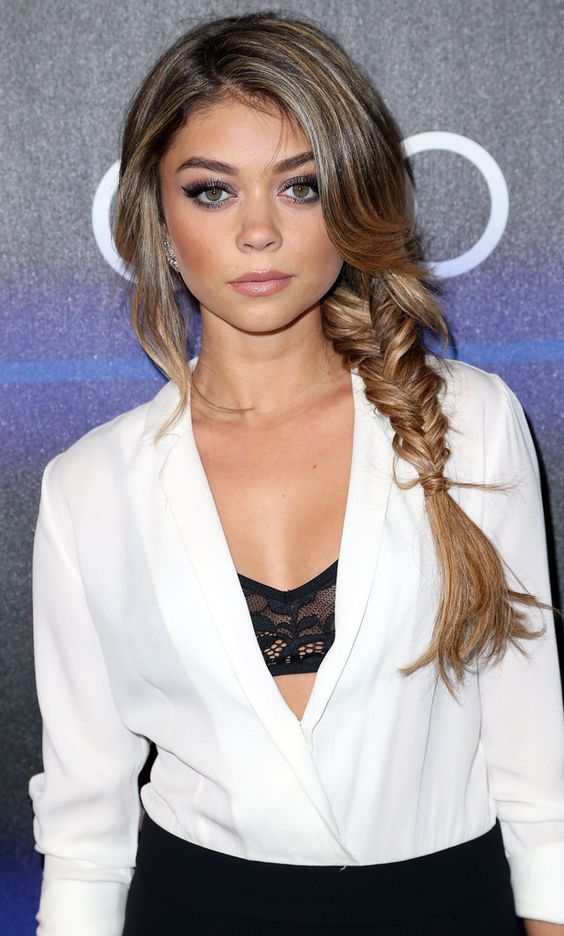
3. The Fishtail Braid
 

e49ee0f82369147b91effc0b1235c2e7

Photo Courtesy of Pinterest.com


At the Ciao Bella Salon, many clients are requesting Sarah Hyland’s fishtail for special occasion styles. The elevated side braid looks romantic and elegant while keeping your hair out of your face. To recreate this look at home, make sure to pull out the pieces of hair that frame your face and curl them with an iron.

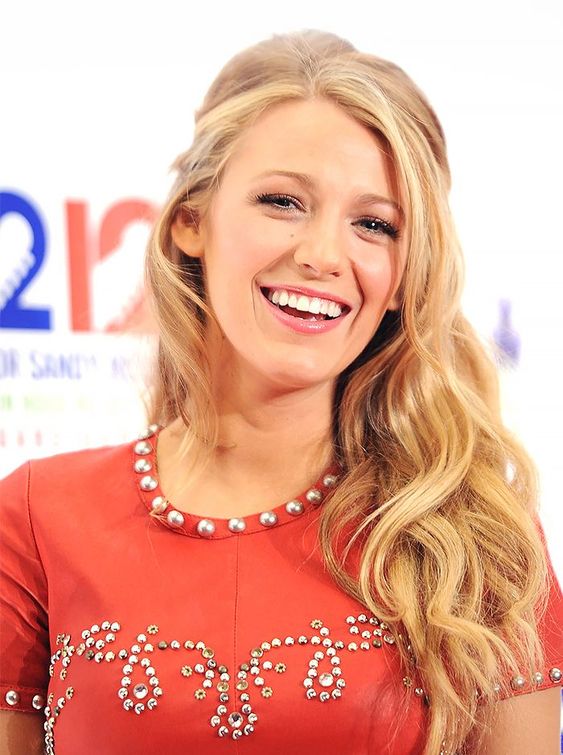
4. The Half-up, Half-down
 

6efcd7d711b873681aaf27cf4b709d21.jpg

Photo Courtesy of Pinterest.com


If you would prefer a combination of curls and keeping your hair pulled away from the face, then the half-up and half-down style worn by Blake Lively is the one for you. Anzinivo suggests wrapping your hair around the iron in alternative directions to achieve a natural look. Once the curls are in place, secure the pieces of hair that frame your face with a clear elastic and you’re ready to go!

5. The Low Pony

 

4be5e6e1165ea6439263f35c86542396.jpg

Photo Courtesy of Pinterest.com


Honestly, Jennifer Lopez never fails to disappoint when it comes to her taste in beauty and hair trends. If you’re interested in recreating her popular, chic ponytail, begin by parting your hair before applying styling cream and securing the low pony. It’s as easy as that! Anzivino advises to not forget to make sure the ponytail is low enough to fit your cap.

6. The Blowout

13b751d1da41bf1737a308104500874a

Photo Courtesy of Pinterest.com


The blowout is a great way to create a simple look that is both straight and has body. Jessica Alba sports a blowout when she wants to keep things more natural, which might be what you’re looking for on graduation day.

One of these styles is sure to have you feeling your best for graduation! If you’re still unsure of which hairstyle is best for you, the hairstylists at Ciao Bella Salon are always happy to answer questions and offer services.

Visit us at 235 S. Main St Ste 102, Gainesville, Fl 32601 or feel free to call us at (352) 379-9200.


The Hidden Gem of Libraries

To all students who love fiction or once did, the hidden gem in Gainesville that you need to know about is the Alachua County Library.

While all of the libraries on campus will supposedly order any book from any library in the state, this has never worked for me in practice. The only books that I have found in UF libraries are educational and nonfiction – but who wants to read more heavy literature in college than required? Throughout my freshman year, I struggled to find fiction, leisure books in the libraries on campus and buying more books than necessary is not an appealing option.

Two months ago, I became a member of the Alachua County Library. The Alachua County Library has almost all of the must-read titles that I have been collecting over the past year. I also submitted a purchase recommendation for a novel that I couldn’t find and received an email from the library a week later saying that the novel had been purchased and put on hold for me to pick up at the Headquarters in downtown Gainesville.

WHY?

  1. It’s free. As long as you are a resident of Florida, which qualifies all students at the University of Florida, it is completely free to get a library card at the Alachua County Library.
  2. More than just books. In addition to novels, members of the Alachua County Library can also rent DVDs, reserve a computer, use the eSources, and download eBooks, audiobooks, magazines, and music. The library also hosts events including Author Series that brings nationally renowned authors to Gainesville. For students, the Alachua County Library offers unique programs including Girls Who Code tutoring sessions and Tax Assistance. Students can choose to participate or volunteer in these programs.
  3. Giving back to Gainesville. The Alachua County Library is the only public library in Alachua County, which has a population of around 250,000 people. Funded by tax-payer dollars, the Alachua County Library has 12 branch locations, two bookmobiles, and multiple deposit collections. As listed by the American Library Association, some of the economic and social benefits of public libraries are: collection of materials for public use; support of educational programs; educational benefits of the library’s mission including literacy of the citizenry; technology for use in the library; employment of the expertise of the library staff; library facility as a community gathering place; “halo” spending by library users at establishments close to the library; value of a library’s enhancement to neighborhood real estate and community partnerships. In addition to the service opportunities offered, simply supporting the library is a small way that you can give back and connect with the Gainesville community.

WHERE, WHEN & HOW?

To register as a member of the library, bring any current photo ID with Florida address or any other verification of residency (UF students from out-of-state qualify.) The Headquarters Location is conveniently located in downtown Gainesville and is open from 9:30AM-9 PM Monday-Thursday, 9:30AM-6PM on Friday, 9:30AM-5PM on Saturday and 1PM-5 PM on Sunday.

Being able to read more as a member of the Alachua County Library has reminded me of my love for fiction and helped me escape the stresses of college. As a member of the Alachua County Library, I also feel more connected to the community, and Gainesville feels more like home than ever.

The Origins of Coffee Shops: a Look Into History

What is beloved by college students, businessmen, and philosophers alike? Coffee. Coffee has played an important role in civilization since the Renaissance. This energizing drink has been inspiring thinkers, businesspeople, and the common person for centuries, and today, there’s hundreds of coffee shops to choose from. So, how should you pick? To understand why coffee shops are so important, it’s important to understand the origins of the modern coffee shop.

The origin of the coffee shop reaches back into the 1500s. Coffee was first grown on the Arabian Peninsula around this time, and the first coffee houses sprung up in the holy city of Mecca. These coffee houses became a place of political discussion and discourse. The Imams, or Muslim priests, actually banned these coffee houses from 1512-1524 because they were believed to be a place of propaganda and threatened to the political regime.

Ottoman Coffee House via DrinkingCup

From the Arabian Peninsula, coffee spread to Europe. With the spread of coffee came the spread of the coffee house. Reports say coffee shops spread to Vienna in 1529, where sweeteners were first added to coffee, then to Damascus in 1534, and to Constantinople in 1555. Eventually, coffee houses distributed across the rest of Europe and served similar purposes as they did on the Arabian Peninsula. According to French traveler Jean Chardin, these coffee houses were a place for sharing news, conducting business, discussing politics, and storytelling.

By the 17th Century, coffee, tea, and chocolate had made its way to England and allowed for coffee houses to open across the country, the first being in 1652. From this point, they exploded in popularity and became common across England. They became wildly popular because these shops were one of the only communal spaces in England that did not involve the consumption of alcohol. Before coffee, taverns were a common place to meet, yet, because clean water was hard to come by, many people drank beer. In coffee houses, the boiling of water for coffee and tea created safe to drink and non-intoxicating drinks. In England, much like elsewhere, coffee houses were a place to gather, discuss politics and philosophy, conduct business, and share stories, without the drunken atmosphere commonly found in pubs and taverns of the time.

English Coffee House via Brewminate

In the United States, coffee became the beverage of choice after the Boston Tea Party, and even Thomas Jefferson proclaimed: “Coffee—the favorite drink of the civilized world.” These coffee houses became integral to society, and today they are still just as important to our modern world.

Today, when you set foot into a café or coffee shop, you still see people experiencing this communal space the same way they did over 400 years ago: by gathering with friends, co-workers, engaging in discussions, and most importantly: enjoying the America’s favorite beverage.

This shop taps into the essence of what these historical coffee houses were made for: community. Not only is Bay Island Coffee Company a staple in the Gainesville community, but helps support this camaraderie by providing a public space for people to gather without distractions. Located in a tiny shack in the middle of Butler Plaza, they strip down many of the high-tech amenities that one would expect from a modern coffee shop: such as Wi-Fi, charging stations, et cetera. Instead, they focus on the basics: fast service, cheap prices, and some damn good coffee. With this simplistic approach, this coffee shop brings together many different walks of life from around Gainesville: from Alachua County residents to UF students.

Via FourSquare

In a college town, it’s easy to be swept up in classwork and gravitate towards fancy Starbucks-like shops, but going to Bay Island is an experience unlike others offered in Gainesville. It is truly a hidden gem, since it is so unassuming from the outside. It is easy to drive by and miss it, but if you have not gone and experienced their seasonal flavored coffee selection, their delectable breakfast offerings, or taken advantage of their daily deals, you are truly missing out on one of the best coffee joints in Gainesville. If you are tired of struggling to find a seat at an over-crowded, loud, university coffee shop, drive a quick 10 minutes down Archer road and experience the best Gainesville has to offer in a friendly, communal environment. Once you try some of their offerings, you will understand why this joint has a cult following by many UF students.

Check out Bay Island Coffee Company, located at 3270 SW 35th Blvd. Make sure to take advantage of their great deals offered daily.

Opening the Doors for Diversity in American Theater

New leadership roles are popping up at theaters across the country. Many of the longtime artistic directors that have served their communities for the past 50 to 60 years are beginning to retire. It’s important to note that most of these directors are white men. Many of them are stepping down to retire, while a few of them are getting the boot after sexual misconduct and workplace harassment allegations. This has created the opportunity for greater diversity in leadership positions within the theater.

In the latest edition of The New York Times, theater reporter, Michael Paulson, writes about this major leadership transition and how it has led to a total transformation within the American theater. According to Paulson, the role of the artistic director is not only to choose the show lineup and oversee its production, but also to serve as the face of the theater, forming relationships with patrons and getting new community members into the audience.  

As many of these artistic directors are stepping down from their roles, more and more are being replaced by women and people of color. A study done by two Bay Area directors, Rebecca Novick and Evren Odcikin, looked at 85 artistic director jobs around the U.S. and found that since 2015, 41 percent of those jobs have been filled by women and 26 percent by people of color.

Paulson suggests that although this leadership transition is a huge step forward in terms of representation and diversity in the theater community, this is still an uneven demographic change. Women are still less likely to get hired over men, and women of color are even less likely to get hired.

“Theater leadership is still not broadly reflective of the nation’s demographics.”

Additionally, once these directors step into their new roles, it is a delicate balancing act to find the right amount of change and continuity. According to Paulson, it’s crucially important that they think strategically about how to lure in new audiences. They should not be so quick to make changes that they distance the theater’s current patrons as a result.

It’s going to take time before theater leadership is fully representative of the demographics of the nation. In the meantime, the small steps towards inclusivity are changing preconceived notions and creating a more welcoming theater experience for everyone.

For more on this, check out, Michael Paulson’s “The Theater, Transformed,” The New York Times (Mar. 20, 2019): C1

Narratives and Content Marketing Strategies

I may have mentioned this before, but content is where it’s at. Content is becoming so important that the content associated with a good or service is as important as the actual good or service.

It seems truer now more than ever that people want to get a sense of who a company is based on how they sell their products. Sure, we all know the history of the famous Sears catalog, and we know how instrumental that catalog was to Sear’s brand.

But what is it about content that reels people in?

Part of the discussion has to do with competition. If two companies are selling the same product, they have to find a way to get their product noticed. Sure, companies can rely on the quality of their product, and perhaps even word-of-mouth, but that may or may not get people through the door initially. Further, that does not guarantee customer loyalty.  This is where a sound marketing strategy comes helps.

What matters is the narrative a business creates about itself, and the narratives a business can generate for its customers. Content is not just about the object or service on sale. It is about the culture created based on the content of the narratives created.

Advertising is a brand of storytelling.
Advertising is brand storytelling.

The latest round of posts will feature students diving into this storytelling schematic.

For this new assignment, students were asked to create a content marketing strategy for a local business here in Gainesville, Florida. This will be a multi-faceted approach to marketing that will feature a long piece (800 words or more), a short piece (think press release), and a presentation. The end goal is for students to come up with creative and topical ways to sell a business via a stratgic-content campaign.

Our class blog will feature some of their long pieces. It will be interesting to see what kind of narratives they create.

-KRW

P.S. feature image is Photo by Kaboompics .com

March Madness

This Week in Sports Media

March Madness

Press Release: Week of March 11th, 2019

Gainesville, March 16, 2019, Internet

Conference Championships are on the line in NCAA as numerous teams push to one of the most compelling spring sports spectacles, March Madness. The NCAA Men’s Basketball Tournament is about to tipoff next Tuesday so the sports world is looking ahead to the possible cinderella stories that could captivate the nation in the coming weeks. Here are this week’s articles that set the stage for the best amatuer basketball tournament in the world and highlight other important conference championship stories.

The article with the most insight into its subject matter was “Brando revisits unforgettable ACC Tourneys including the day Dean Smith chided a Virginia player” by David J. Halberstam. Halberstam talks with Tim Brando, an analyst who will be commentating on the Atlantic coast Conference tournament for the last three decades. Brando will stop covering the tournament after this year because ESPN will start sole coverage of the event and the company that Brando works for, Raycom, will stop their coverage. Brando lists some of his favorite moments in covering the tournament and discusses the life-long memories that he has made during his experience. Brando finished off one of his anecdotes with the sentence “Ya’ never forget moments like those”. It is clear to see that Brando’s time broadcasting the ACC tournament mean very much to him.

Seeing someone who has spent so long in the field of sports broadcasting reminisce about some of his favorite moments over his entire career is really something that is inspiring to see. One that aspires to be in this profession would agree that anecdotes like the one’s shared in the article are stories that anyone in the field would strive to call their own. It is a shame to see a broadcaster have to stop working because of a licensing agreement, but Brando does not express any harshness or bad feelings in the article and that is good to see.

The goal of Sports Broadcast Journal (Initially Sports Announcers Report Card) is to serve a mix of announcers, executives, producers, and other interested followers of sports broadcasting, podcasting, webcasting, and the growing world of digital media.

William Camron Lunn Twitter:@CamronLunn Email:Camron12@ufl.edu

Media and Creativity Collide

The world of advertising is always evolving and changing with the flow of the consumers’ needs. If advertising teams remain stagnant, they become a rock in the river impeding the flow of progress instead of promoting it. The most successful teams are the ones open to change. Sometimes just changing a P to a B is all you need.

Lindsay Rittenhouse gives some insight on how companies are moving with change in this week’s issue of Adweek. IHOP, BP and Westworld are a few examples of how companies are consolidating their media and creative teams to push innovation forward. IHOP’s collaboration with IPG agencies Initiative and Droga5 allowed for the IHOb campaign to come to fruition. All it took was a letter change to blow up Twitter. It would not have happened though if Initiative and Droga5 had not worked so closely throughout the campaign. Consumers in this generation require personalized media and innovative ideas to garner their attention. This creates a need for media teams and creative teams to become synonymous in order to deliver successful media campaigns. BP also had WPP Team Energy create the “Possibilities Everywhere” campaign in order to emphasize its support of transitioning to a lower carbon future. WPP used a single team made up of strategists, media specialists and creatives in order to deliver the campaign instead of splitting up the responsibility into separate teams. Westworld and Giant Spoon also found great commercial success in its campaign for the new TV show. Giant Spoon co-founder Marc Simons stated how they don’t treat media creation like an assembly line. “There’s a central team made up of strategy, creative, media, experiential that is linked to our projects. It’s not just a media-led project or creative-led project,” Simons said.

Advertising has become a creative collaboration. As consumers take in new media their expectations rise. Media and creative teams can no longer act separately if they want to create the next IHOb. Creating innovative media is difficult for one department to do. Everyone can’t be as witty as the International House of Pancakes, or should I say burgers. While collaborations between teams can bring tension and cause individuals to butt heads the pay off is tremendous. IHOP’s campaign speaks for itself garnering 1.2 million tweets and 15,000 media stories in just ten days. There were probably individuals who laughed at the idea of IHOb proclaiming that a letter change won’t create any media buzz. Low and behold though that the IHOb campaign is one of the most successful media strategies in the past few years. Times are changing and with that consumers needs are as well. Advertisers need to take risks and get creative with their media. IHOP and Westworld have shown the industry that consolidating media and creative teams are a step in the right direction in combating an evolving market. Who will use this information to succeed in the market? Only time will tell. It is clear as day though that advertising must do something different or it risks falling to the wayside in the mind of the consumers.

For more information, follow up by reading the article What’s Old is New in Adweek volume 60.

‘Avengers: Endgame’ and the Marvel Fishhook

After eleven years of universe building, Marvel already has our attention and doesn’t need to do much more in the way of teasing

Since 2008, Marvel has had comic book nerds and action movie lovers alike raving over their ever-expanding cinematic universe. With every post-credit scene and every teaser trailer, the Disney-owned company charges up potential energy to slingshot the next installment under their name into the list of highest grossing movies of all time. Avengers Infinity War, released in late April 2018, sits comfortably at number 4 on the list; Captain Marvel, the franchise’s latest release, blew past the $500 million mark in just a week.

Brie Larson as Captain Marvel

But Marvel barely needs to lift a finger anymore to get fans foaming at the mouth for their next film, and their recent trailer for Avengers: Endgame shows that they know it. The trailer, which mostly consists of shots from past Marvel movies, seems to act simply as a recap for fans to know what is at stake in the movies: the fate of the entire cinematic universe. Fans have speculated on who we might lose in the next film, but no one knows for sure.

“It [seems] impossible to not disappoint fans who [have] built impossibly high expectations about the conclusion of the Infinity War storyline…We’re two (three) trailers in, and Endgame has been appropriately teased without saying almost anything at all about the movie itself, therefore upsetting no one.”

            Graeme McMillan, writing for the Hollywood Reporter, hits the nail on the head when he explains why Marvel no longer needs to provide spoilers in their trailers. Spoilers ruin excitement and upset fanbases. All Marvel needs for their well-established universe (eleven years in the making) is a few urgent tones and ultimatums like those heard in the trailer, repeating “Whatever it takes” all the way through.

Scarlet Johansson, Karen Gillan, and Robert Downey Jr. in the trailer forAvengers: Endgame (set to release April 2019)

            For more information on Avengers: Endgame, check out Graeme McMillan’s “Avengers: Endgame and the Art of the Spoiler-Free Trailer,” The Hollywood Reporter, (Mar 14, 2019).

-Ian

Marie Kondo Floods Thrift Stores with Unwanted Items

Photo courtesy of the herald-dispatch

The reality TV show on Netflix “Tidying Up with Marie Kondo” has taken the world by storm since it first aired in January 2019. This minimalist home improvement show has revolutionized the tidying up game, and all of a sudden everyone has begun cleaning out their homes of anything unwanted. In the show, Kondo stresses only keeping items that “spark joy”, which entails for a lot of stuff to be thrown out or donated.  Although this sounds great for the person cleaning out their home, it’s not so great from thrift store employees, who are suddenly being hit by a colossal wave of donations.

According to The Wall Street Journal, “Goodwill Industries International Inc., which operates used-goods stores across the U.S. and Canada, said January donations rose by more than 32% in Washington, 22% in Houston, 20% in Roanoke, Va., and 16% in Grand Rapids, Mich,” which is right around the time the show first aired. Donations are obviously a huge part of a thrift stores business, but recently the surplus of donations has been too much for the workers to handle. It is their job to sort through all of the donations that the store receives and they are also finding that a lot of the donations contain items that are inappropriate or unsellable. Some stores have even asked people to hold off on donations so that they can get through the backlog.  

If we don’t want them, and thrift stores don’t always want them, then what are we supposed to do with our unwanted items? Kondo is now proposing a new step to the decluttering method which, according to her, “encourages reflection on waste and action when it comes to reducing, reusing, recycling and respecting.” Instead of asking if something sparks joy when you are getting rid of it, you must ask if it will spark joy when you are purchasing it. Many times, people just buy things that they don’t really want or need, which is the reason they end up with so much junk in their homes in the first place.

For more on this, check out Rachel Pannett and Rhiannon Hoyle’s article “Marie Kondo Isn’t Sparking Joy for Thrift Stores”, Wall Street Journal (Mark 6, 2019). https://www.wsj.com/articles/marie-kondo-persuaded-you-to-jettison-your-junk-thrift-stores-sayenough-11551889124?mod=searchresults&page=1&pos=2

Interactive Museums Become Hot Spots for Millennials

In the modern age it seems most people are not shy to post their daily outings on social media platforms? As an effort to connect with social media engrossed individuals in society, interactive museums serve as a new way to involve guests by featuring the perfect set-ups for your next instagram post.

“The average millennial checks their phone 43 times and spends five hours on social media per day.”

In order to produce successful marketing in the modern age, strategies must reflect knowing “where the millenials are” and what they are interested in.

Refinery29’s 29Rooms pop-up featured 29 different interactive, artistic displays inviting guests to become one with the art. The Museum of Ice Cream in Miami features a set of fun, brightly colored rooms which feature a banana swing, sprinkles play pool and whipped cream cloud exhibit.

(Image Courtesy of Refinery29)

These displays not only are fun for visitors, but serve as a successful marketing strategy. Once photos are posted online through Snapchat, Instagram and Facebook, others become interested in visiting these centers as well. Capturing the interest of more potential visitors and dispersing unpaid advertising presents a win-win for these “selfie factories.”

Other potential successful strategies may include scavenger hunts which connect with a brand. This may include “digital touchpoints” or app-related experiences exclusive to those with access. For example, by buying VIP tickets to a concert, a customer may receive a personalized message from the head singer.

Interactive experiences present a seemingly fun and easy activity which captures an audience and presents effective advertising as well. From selfie factories to interactive programming, creative strategies provide sufficient revenue and pull in the interest of modern day consumers.

For more on this, check out,  Daniel Ramirez’s “Creating Experiential That Stands Out in a Crowded Industry”, Voice, Adweek (Mar 12, 2019).

https://www.adweek.com/brand-marketing/creating-experiential-that-stands-out-in-a-crowded-industry/